NEW: Consolidate orders, forward time slots – and gain full control
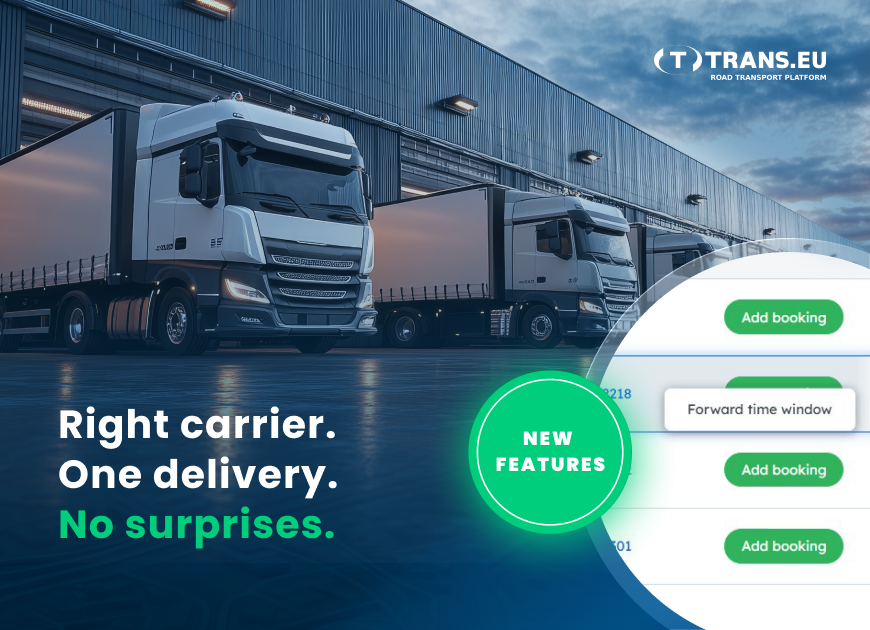
In modern logistics, one transport rarely means a single carrier. Forwarders assign shipments to carriers, but those may subcontract them further. As a result, by the time the truck arrives at the warehouse, the company listed in the system is often not the one actually performing the delivery.
The result? The warehouse expects one carrier, but a different one arrives. Vehicle, driver, and consolidated order details are missing, so security has to verify everything again. Forwarders start calling carriers, and unloading gets delayed.
To solve these everyday problems, we’ve introduced two new features to our time-slot booking system:
- Time-slot forwarding
- Order consolidation
Together, they give forwarders greater control over complex transport chains while reducing operational workload.
Time-slot forwarding: pass the booking to the real carrier
Forwarders often manage transport chains involving multiple subcontractors. In traditional dock scheduling systems, the booking remains assigned to you, while the delivery is carried out by a carrier – or even their subcontractor.
This creates a common problem: the truck that arrives at the warehouse is not the one listed in the system. Time-slot forwarding in our system solves this issue.
From now on, the booking can be passed directly to the carrier responsible for the delivery – even multiple times along the subcontracting chain. The carrier then fills in the information required for unloading, including:
- truck license plate numbers
- driver details
- driver contact phone number
As a result, warehouse security and operations teams know exactly who will arrive before the truck reaches the gate.
What it means:
- Less manual coordination. Instead of repeatedly calling carriers to collect vehicle data, the forwarder simply forwards the time slot, and the carrier fills in the information directly in the system.
- Clear accountability across the subcontracting chain. Every participant can see who is actually performing the transport.
- Greater operational predictability. When accurate vehicle and driver data are available in advance, it’s easier to avoid delays, e.g. during security checks.
- Faster response to changes. If a carrier needs to change the vehicle or driver, they can update the data directly in the system – without the need for back-and-forth coordination with the forwarder.
The result is a simpler operational workflow and fewer phone calls throughout the day.
Order consolidation: speed up unloading
You often combine deliveries for the same customer into a single transport to reduce costs. While this improves transport efficiency, it often creates problems during unloading. The warehouse may expect one order but actually receive several at once. Without prior visibility, unloading becomes slower and more chaotic.
Thus, we have introduced structured order consolidation, allowing multiple orders to be clearly linked to one booking. This means warehouse teams can see all orders assigned to a truck before it arrives.
The benefits:
- Lower transport costs. Forwarders can combine several smaller shipments into one transport without creating chaos at unloading.
- Better warehouse preparation. Warehouse teams know exactly what the truck brings and can prepare unloading accordingly.
- Faster dock operations. When consolidated deliveries are visible in advance, warehouses can handle them more efficiently.
Instead of slowing down operations, order consolidation increases delivery predictability.
Gaining control without extra coordination
Modern supply chains can be complex and involve many logistics partners. However, managing this complexity shouldn’t require constant manual coordination.
By enabling time-slot forwarding and structured order consolidation, our platform helps forwarders reduce delivery management effort and maintain visibility across subcontracting chains.